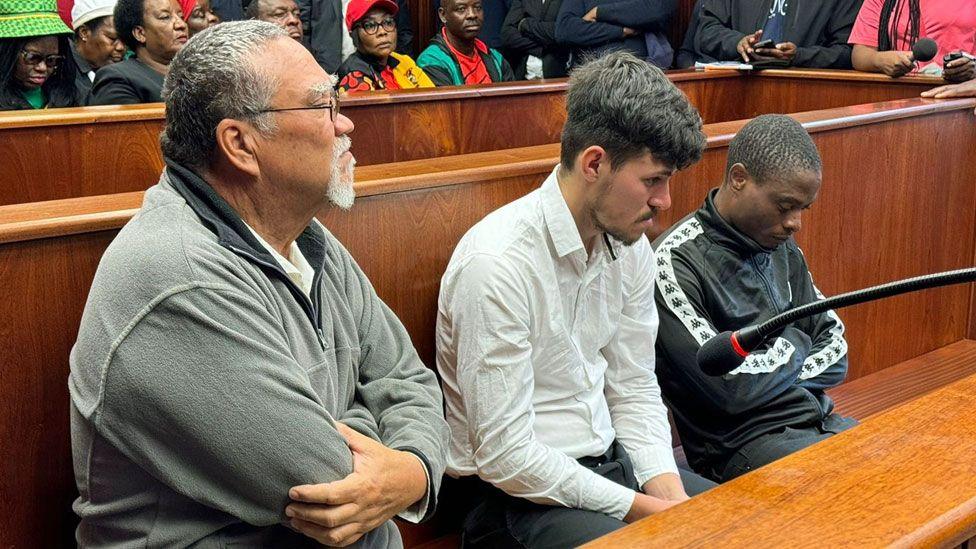
In South Africa, a case unfolding in the courts has drawn national and international attention due to its disturbing allegations and the broader social tensions it evokes. A white farm owner is currently on trial for the alleged murder of two Black women, with prosecutors accusing him of attempting to dispose of the victims’ bodies by feeding them to pigs on his property. The trial has become a focal point in conversations about racial violence, land ownership, and justice in post-apartheid South Africa.
The defendant, who manages and runs a business farm in a rural area of the nation, has entered a plea of not guilty to the allegations, which encompass two murder charges, hindering justice, and infringing on personal dignity. The prosecution alleges that the farm manager deliberately targeted the victims, two Black women in their twenties, and committed the offenses on his land before going to great lengths to hide the events.
Based on legal records and declarations by the investigative bodies, the pair of women had been declared missing several days prior to the discovery of their remains. Specialists in forensics subsequently matched body fragments resembling human remains located in a pigpen on the suspect’s estate. Genetic analysis verified the victims’ identities, whose relatives had expressed worries regarding their absence following a reported visit to the location for job-related activities.
In initial hearings, the prosecution presented a haunting series of events, claiming that the farm owner enticed the women to the location under deceptive circumstances before perpetrating the assaults. Witnesses have offered testimony indicating past incidents of verbal harassment and biased conduct by the defendant towards employees and local residents, which the prosecutors contend shows intent and planning.
The defense, on the other hand, has dismissed these allegations, describing the defendant as a reputable entrepreneur with no previous offenses. His defense team has cast doubt on the investigation’s credibility, accusing improper evidence handling and witness intimidation. They argue that the defendant was not involved in the victims’ fatalities and propose that another individual might have deposited the remains on the property.
As the trial progresses, the courtroom has become a site of emotional confrontation, with family members of the deceased calling for accountability and justice. Demonstrators have gathered outside the courthouse on several occasions, demanding that the case be handled with transparency and urgency. Some protestors have framed the case as part of a larger pattern of violence against Black South Africans, especially women, in rural communities where policing and oversight are often limited.
South Africa has a complex and painful history with race relations, particularly when it comes to the legacy of apartheid-era land distribution and the ongoing tensions between white landowners and Black residents in rural regions. This case has reignited longstanding debates about racial justice, gender-based violence, and the power dynamics that persist in farming areas. Activists and community leaders argue that the violence cannot be viewed in isolation but must be considered within the broader context of structural inequality and historic trauma.
Legal specialists observing the trial emphasize that the verdict could establish a significant precedent for handling similar crimes in South Africa. The case has captured the attention of human rights groups and worldwide observers who track racial equity and the rights of women in the area. Numerous individuals have voiced worries about the security of at-risk groups in poorly-equipped regions, where violence linked to gender and race frequently remains unreported or insufficiently investigated.
Responding to public anxiety, the South African Police Service announced it is carrying out a detailed and unbiased inquiry. Officials have committed to assign the essential forensic tools and guarantee that every procedural step is adhered to correctly. Government representatives have also recognized the uproar and stressed the significance of securing accountability in situations involving marginalized individuals.
The widespread national dialogue ignited by this trial involves revived appeals for change in rural law enforcement, enhanced assistance for survivors of gender-related violence, and fairer land regulations. Certain legislators have suggested broadening rural justice programs and enhancing availability of legal support in isolated areas, where people frequently do not have the means to seek justice on their own.
In the meantime, the families of the victims continue to seek answers and closure. Speaking through legal representatives and local media, they have expressed grief, outrage, and a desire for justice that goes beyond punishment — justice that acknowledges the value of the lives lost and the broader harms endured by communities facing similar struggles.
As the trial continues, it stands as a test of South Africa’s ability to confront difficult truths about race, violence, and power. While the legal system works through the evidence and arguments, the broader public will continue watching closely, hoping for an outcome that affirms the principle of equal protection under the law — and the dignity of every individual, regardless of race, gender, or social status.