

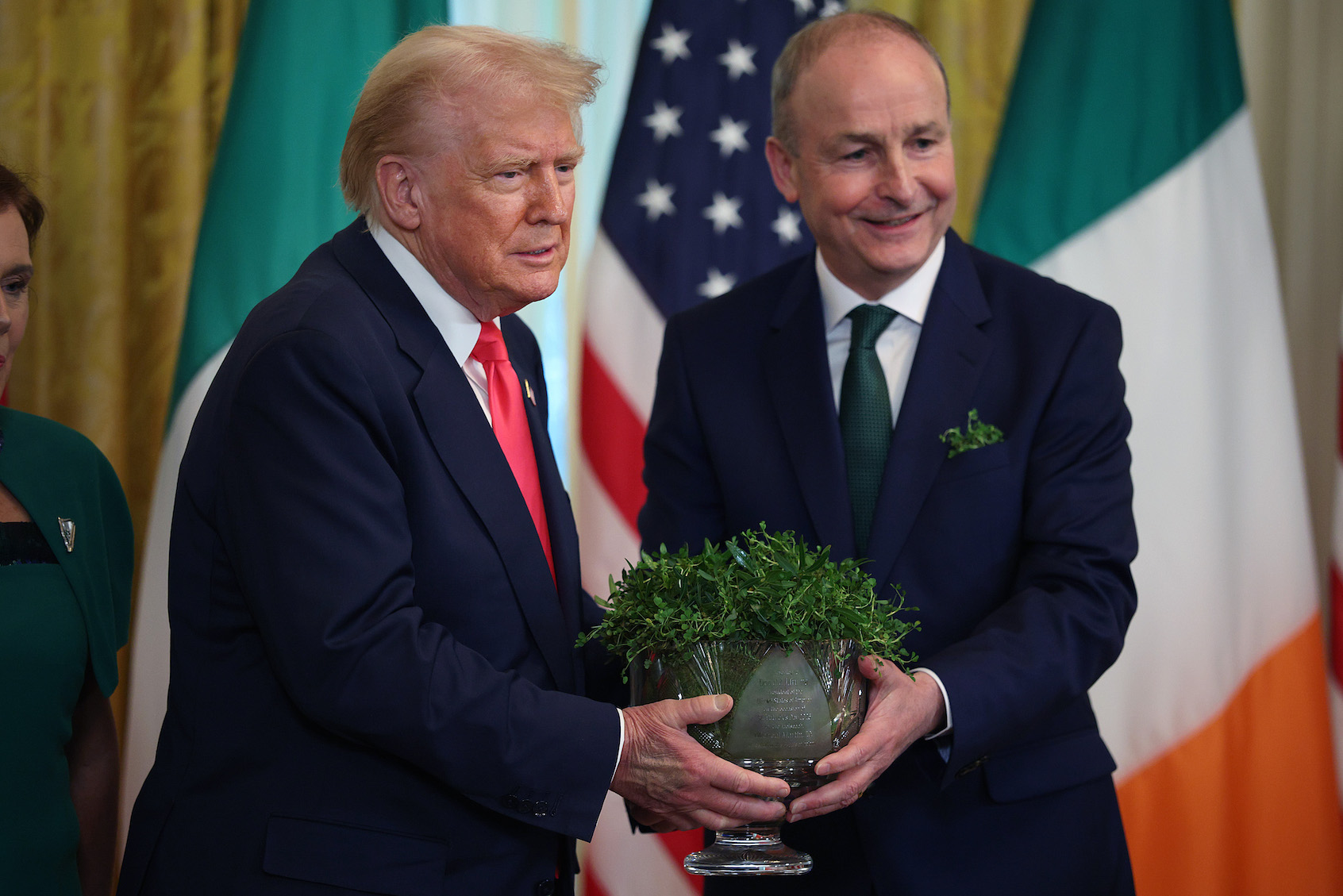
When former U.S. President Donald Trump brokered a trade understanding with the European Union, reactions across Europe were mixed. In Ireland, the reception was particularly reserved. Far from celebrating the deal, Irish leaders and stakeholders expressed a blend of cautious skepticism and concern over its potential consequences, particularly for key sectors like agriculture and technology that are deeply tied to transatlantic trade.
Although the Trump administration portrayed the announcement of the trade agreement as a major step towards easing economic tensions with the EU, numerous policymakers from Ireland saw it differently. They perceived that the agreement provided limited concrete advantages for Ireland and raised concerns over its lasting effects on trade balance and regulatory independence.
Agriculture remains one of Ireland’s most significant economic sectors, and it is heavily dependent on exports to both the EU and global markets, including the United States. Any shift in trade policy that alters the competitive landscape for Irish food products is therefore met with careful scrutiny. The Trump-era deal, which included limited tariff reductions on select American agricultural exports to the EU, raised alarms among Irish farming groups.
Farmers in Ireland were worried that even slight expansions in the entry of American agricultural products to the European market might lower prices and endanger the competitiveness of locally made commodities. Additionally, there was apprehension about the potential for regulatory differences. American farming techniques, particularly in relation to genetically modified crops and the use of specific growth hormones, vary considerably from European norms. Irish parties were anxious that reducing trade limits might result in pressure for regulatory concessions—something Ireland has steadfastly opposed.
Another source of Ireland’s muted response was the perception that the trade agreement offered more immediate advantages to U.S. exporters than to European firms. While the deal was hailed by the Trump administration as mutually beneficial, Irish trade experts noted that the terms favored American goods in sectors where the U.S. had been seeking greater market access for years.
Ireland, which is a strong proponent of open trade and has benefited significantly from the EU’s collective trade agreements, questioned whether this bilateral gesture between Washington and Brussels would meaningfully support Irish economic interests. Many pointed out that the agreement focused on reducing specific tariffs and quotas rather than addressing broader trade barriers or creating new opportunities for Irish companies.
Ireland’s position as a key center for international tech companies, especially American giants such as Google, Facebook (Meta), and Apple, made the trade agreement’s effects on digital regulation particularly significant. Although the deal didn’t greatly change digital trade rules, it sparked renewed debates in Ireland about data protection, business taxes, and the influence of U.S. corporations within the Irish market.
Irish regulators have long been at the center of the EU’s enforcement of digital privacy laws, given that many major tech firms have their European headquarters in Dublin. Any trade arrangement perceived to undermine Europe’s stringent data protection standards, such as the General Data Protection Regulation (GDPR), was bound to receive close scrutiny in Ireland. Although the Trump-era agreement did not directly challenge these standards, the broader posture of the U.S. administration toward deregulation raised concerns among Irish officials about potential future pressure to weaken enforcement.
The reserved reaction from Ireland towards the trade agreement was influenced by wider political factors. The diplomatic and trade strategies of the Trump administration frequently contradicted the multilateral values that Ireland usually upholds. Irish officials were hesitant to approve an agreement that was formulated with minimal transparency and outside the customary channels of the World Trade Organization (WTO).
Moreover, at the time of the agreement, ongoing tensions surrounding Brexit had already heightened Irish sensitivity to international trade shifts. Any U.S.-EU deal that failed to account for Ireland’s unique position—especially regarding Northern Ireland and cross-border trade—was likely to be met with restraint rather than enthusiasm.
Ireland also placed high value on the integrity of EU negotiations as a bloc. A bilateral announcement framed as a major diplomatic achievement by the U.S. risked undermining the EU’s unified trade approach, something Ireland has long supported as a smaller member state that benefits from collective bargaining strength.
Although the deal was not rejected outright by Ireland, it was received with a tone of guarded observation rather than approval. Irish officials emphasized the importance of ongoing dialogue and the need to ensure that any trade developments uphold high standards in environmental protection, food safety, digital privacy, and fair competition.
Later governments in the U.S. and EU have worked on enhancing the transatlantic trade ties by rebuilding trust and clarifying aspects that remained unclear or unresolved from the Trump administration’s agreement. In Ireland’s case, this has involved strengthening its involvement as a leading force in EU discussions and consistently promoting measures that balance transparency with strategic oversight.
In summary, although the trade agreement with the EU facilitated by Trump was presented as a diplomatic success, Ireland’s response highlighted the intricacies of contemporary global trade. For Irish authorities and industrial associations, the focus is not on immediate gains or political appearances, but rather on enduring strategies that safeguard national interests, are consistent with European principles, and ensure long-term stability in international commerce.



.jpg "Key compliance requirements for maintaining a Panama offshore company")