

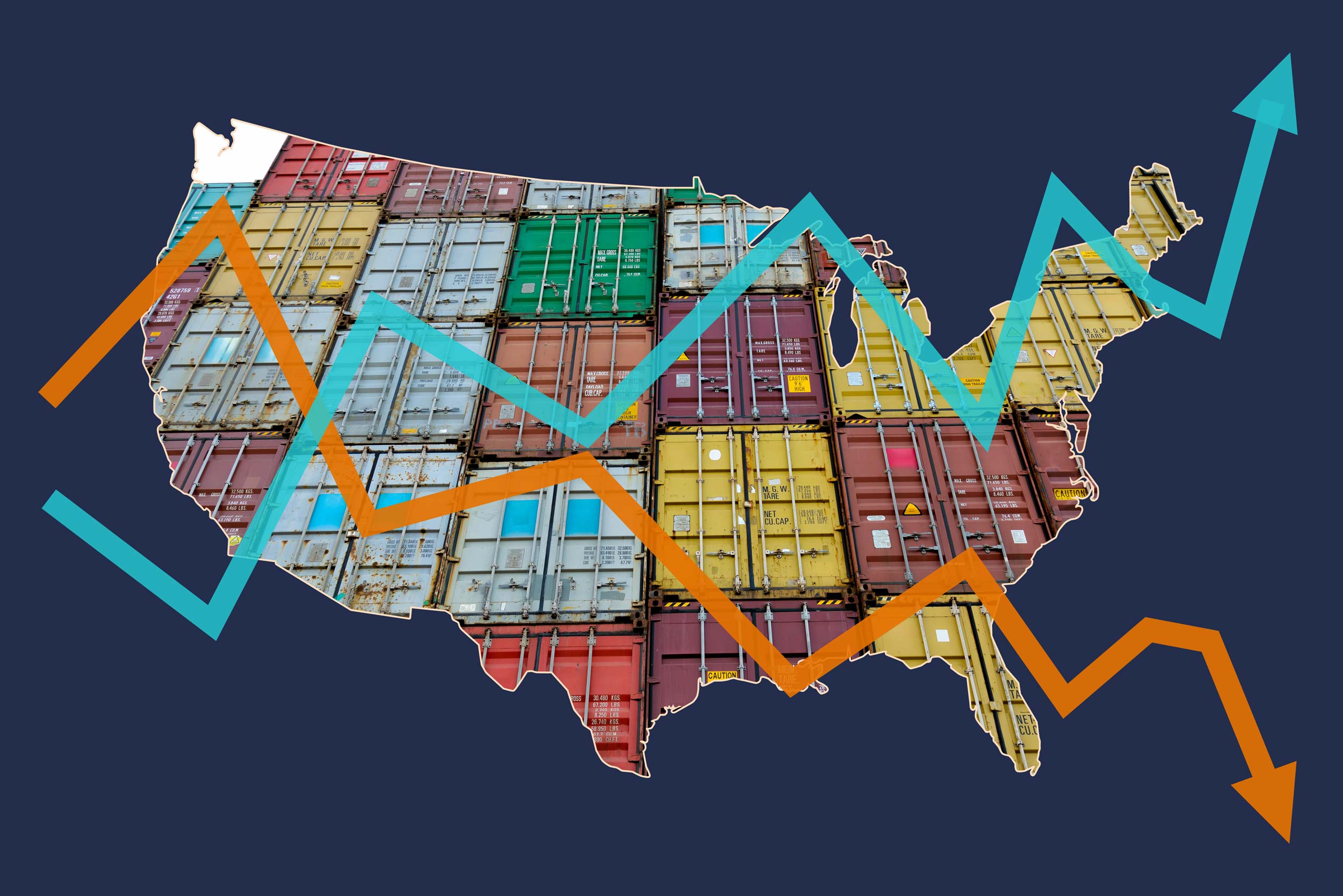
Consumers are starting to notice the effect of tariffs as costs for daily products and necessary items begin to increase. Economists point out that this might be the start of a larger economic change. The consequences of tariffs, initially considered a measure for safeguarding local industries, are now impacting the finances of regular families, raising worries about impending inflation and the steadiness of the economy.
The imposition of tariffs, which are essentially duties on imported items, has been a long-debated topic in international trade policy. Nations employ them to promote the consumption of domestically made products and to create fair conditions for national industries that compete against less expensive overseas imports. Although these actions can shield specific industries, the larger economic impacts can be extensive and intricate.
In recent months, a variety of tariffs on essential imports like metals, electronics, machinery, and consumer goods have started to lead to increased costs in both the wholesale and retail markets. For companies that depend on imported resources or items, these extra expenses often present them with a challenging decision: either absorb the costs, which reduces their profit margins, or transfer them to consumers through price hikes.
Many companies, especially within the realms of manufacturing, construction, and retail, have opted for the latter approach, leading to significant hikes in the prices of goods spanning from electronics and vehicles to common household products. This pattern is currently mirrored in inflation statistics, with numerous nations noting an increase in consumer price indexes, which is in part due to the application of tariffs.
Economists caution that this could be just the beginning of a more sustained period of price escalation if tariffs remain in place or expand further. They warn that once inflationary pressures take hold, they can be difficult to reverse without significant economic intervention. The fear is that if wages do not keep pace with rising prices, consumer spending—the engine of most modern economies—could weaken, potentially slowing economic growth.
The reasons behind the recent wave of tariffs vary by country and political context. In some cases, tariffs are being used to address longstanding trade imbalances or to retaliate against perceived unfair trade practices. In others, they are part of broader geopolitical strategies aimed at asserting economic independence or protecting sensitive industries considered vital to national security.
Regardless of the motivation, the result has been an increase in the cost of doing business for companies that depend on global supply chains. Industries that rely heavily on imported components—such as electronics, automotive, and construction—are particularly vulnerable. These sectors have already reported rising production costs, which, when passed on to consumers, can contribute to higher prices across a wide range of goods and services.
Small and medium-sized companies are also experiencing strain. In contrast to big multinational firms, which might be equipped to handle cost upsurges or reconfigure supply chains, smaller businesses typically have restricted adaptability. This suggests they are more prone to transferring expenses directly to customers or facing the threat of closure. This situation impacts consumer pricing and could also have repercussions for jobs and regional economies.
For households, the impact of rising prices due to tariffs is beginning to be felt in subtle but significant ways. Shoppers are noticing higher costs for everyday essentials, from groceries and clothing to electronics and home appliances. Over time, these incremental increases can add up, straining household budgets, particularly for middle- and lower-income families.
Economists emphasize that the effects of tariffs are not confined to price hikes alone. They can also influence market behavior, investment decisions, and global supply chain dynamics. For example, manufacturers might choose to relocate production facilities to avoid tariffs, which can create economic uncertainty and disrupt established trade relationships.
Furthermore, when nations partake in mutual tariff actions—implementing duties as reactions to the measures of one another—it may lead to trade disagreements that affect the global economic landscape. Previous trade issues have demonstrated that these eye-for-an-eye tactics can result in enduring economic consequences, such as diminished growth, market fluctuations, and a decrease in global collaboration.
One of the sectors closely watching the situation is the agricultural industry. In several cases, agricultural exports have been caught in the crossfire of trade disputes, leading to reduced demand for farm products in key international markets. This not only affects farmers’ incomes but also contributes to economic instability in rural regions that depend heavily on agricultural trade.
Energy costs might also experience an impact due to tariffs, particularly in regions where fuel, basic materials, or parts for energy infrastructure are subject to import taxes. This situation could result in rising expenses for electricity and transportation, further intensifying the inflationary pressures on consumers.
To lessen some of the adverse effects of tariffs, governments might look into establishing specific relief strategies or financial support for impacted sectors. Nevertheless, these approaches bring their own challenges, such as the possibility of higher public expenditures and the difficulty in guaranteeing that support goes to the most affected areas.
Financial markets are also keeping a close eye on the developments. Investors typically view tariff-related trade tensions as risk factors that can influence stock market performance, currency values, and investment flows. Prolonged uncertainty over tariffs can erode business confidence, delay investments, and disrupt financial stability.
Some policymakers argue that tariffs are a necessary short-term tool to achieve longer-term economic goals, such as reducing dependence on imports, stimulating domestic manufacturing, or addressing national security concerns. However, the economic data suggests that achieving these outcomes without broader negative effects is extremely challenging.
Global organizations such as the World Trade Organization and the International Monetary Fund have consistently warned against the overuse of protectionist measures, cautioning that they can backfire by slowing global economic growth and increasing costs for all parties involved.
The ultimate impact of the current tariff landscape will depend on several factors: the duration of the tariffs, the possibility of negotiated trade agreements, and the adaptability of businesses and consumers. If tariffs are lifted or reduced through diplomatic negotiations, some of the inflationary pressures could ease. Conversely, if new tariffs are introduced or existing ones are expanded, the economic strain is likely to deepen.
From the perspective of a consumer, paying close attention to expenditures and seeking ways to save money can mitigate some impacts of increasing costs. By making informed shopping decisions, evaluating price differences, and postponing non-essential buys, families can better manage the current economic situation.
At the same time, industry leaders are calling for greater dialogue between governments, trade bodies, and businesses to find balanced solutions that protect domestic interests without causing undue harm to consumers and the broader economy.
The scenario is still evolving, with numerous economists urging close observation of pricing patterns and consumer habits in the upcoming months. As the complete impacts of tariffs persist in developing, it’s evident that companies and consumers alike will have to stay flexible and well-informed.
What is certain is that the conversation around tariffs is no longer confined to policy discussions in government halls—it is now part of the everyday reality for millions of people. As prices continue to rise, the hope is that collaborative solutions can be found to ensure economic stability, protect livelihoods, and maintain the balance between national interests and global cooperation.



.jpg "Key compliance requirements for maintaining a Panama offshore company")