
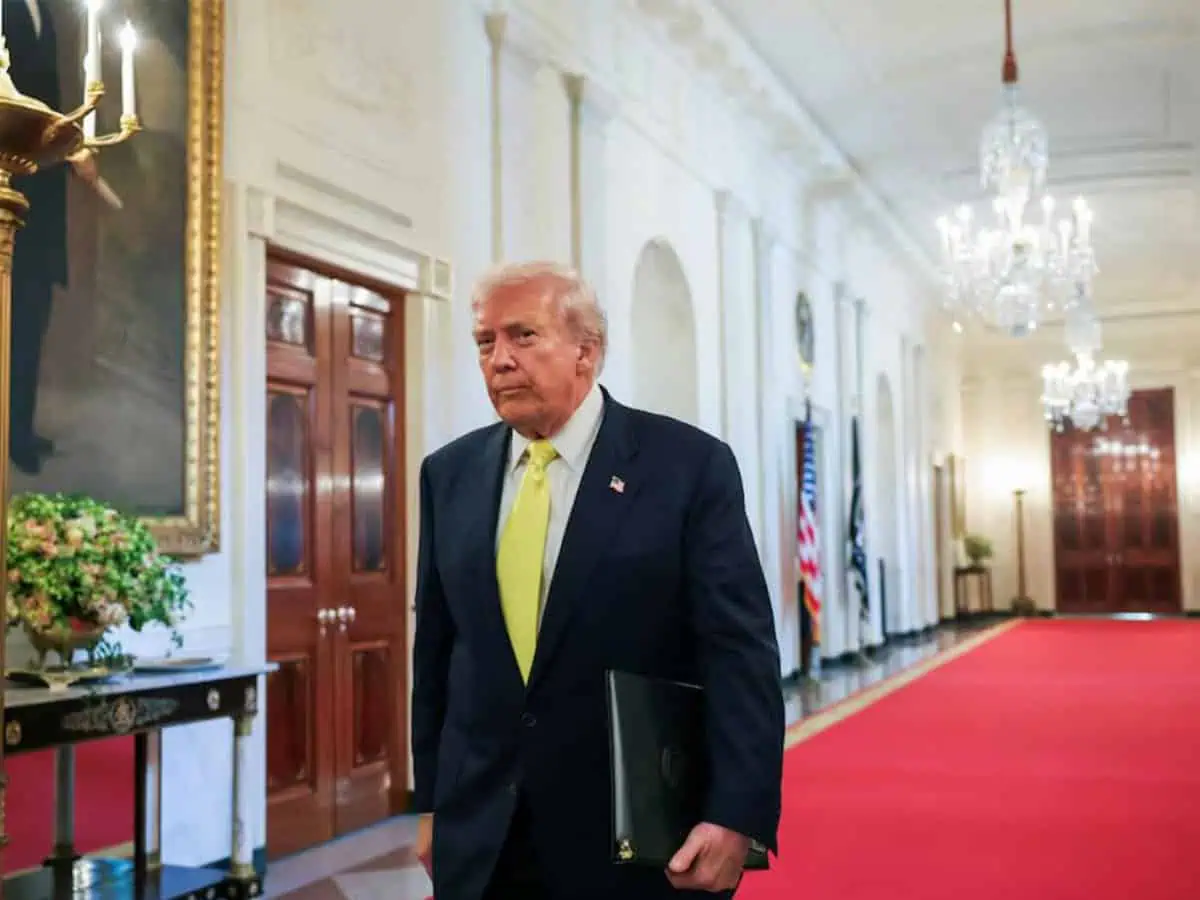
The United States and China have once more prolonged their trade ceasefire, postponing a possible increase in tariffs that could have greatly impacted the global economy. In an executive order signed mere hours before the previous deal was due to end, President Donald Trump delayed the implementation of elevated tariffs on Chinese goods for another 90 days. This choice, which Beijing mirrored with a similar extension, gives both countries additional time to tackle their continuing trade disagreements and aim for a more comprehensive agreement. The action was broadly viewed as a crucial measure to avert an outright trade conflict and has been welcomed by financial markets and American companies.
The choice to postpone the increase in tariffs stems from prolonged and complex discussions and an acknowledgement of the substantial economic repercussions that would have emerged without a ceasefire. The earlier arrangement, established in May, had momentarily reduced tariffs from excessively high triple-digit figures that endangered commerce between the two nations. The latest renewal preserves the present yet still elevated tariff levels, with the US imposing a 30% duty on Chinese imports and China enforcing a 10% charge on American exports. This provisional steadiness is vital for enterprises that depend on international supply chains, especially as they gear up for the forthcoming holiday shopping period.
The White House’s executive order stated that the United States continues to have discussions with China “to address the lack of trade reciprocity” and other concerns, and that Beijing has “taken significant steps” to address them. These issues include intellectual property rights, non-reciprocal trade arrangements, and government subsidies that American officials argue give Chinese companies an unfair competitive advantage. The extension is seen as a way to allow these complex negotiations to continue without the pressure of an immediate trade war. It also keeps open the possibility of a future meeting between President Trump and Chinese President Xi Jinping, which many believe is essential for a lasting resolution.
The trade relationship between the US and China is not just about tariffs; it is a complex web of economic, political, and strategic interests. The use of tariffs as a bargaining tool has been a central part of President Trump’s trade policy, aimed at reducing the trade deficit and bringing manufacturing jobs back to the US. However, this strategy has also created significant challenges, with some analysts arguing that it has not yielded the desired concessions from China and has given Beijing a “cudgel of its own” in the form of control over rare earth minerals and other critical exports. The extension of the tariff deadline highlights the difficulty of using tariffs as leverage and the need for a more nuanced approach to trade negotiations.
The influence of this trade agreement extends beyond the United States and China. These countries are the world’s two biggest economies, and their trade connections significantly impact global markets and supply chains. The uncertainty from potential increasing tariffs has led to fluctuations in financial markets, complicating global business planning. Extending the deadline offers a necessary calm period, enabling increased stability and predictability in international trade. Nevertheless, the core problems remain unsettled, and there is still the risk of a future trade conflict.
For American businesses, the extension is a welcome development. Trade groups like the US-China Business Council have been vocal in their support for a pause in the tariff war, arguing that it is “critical” for providing the stability needed for medium and long-term planning. They also hope that the negotiations will lead to an agreement that improves their access to Chinese markets and removes some of the retaliatory measures that have hurt American exports. The trade war has had a tangible impact on various sectors of the US economy, from agriculture to manufacturing, and a lasting resolution would be a significant boost for many American companies.
This recent development underscores the intricate and high-stakes nature of the US-China trade relationship. While the immediate threat of a major tariff escalation has been averted, the core disagreements between the two nations are far from resolved. The next 90 days will be a crucial period for negotiators to work toward a deal that can satisfy both sides and set the foundation for a more stable and reciprocal trade relationship. The world will be watching closely as these two economic giants attempt to find a path forward that avoids a costly and damaging trade war. The future of global trade hangs in the balance, and the outcome of these talks will have a lasting impact on economies everywhere.