

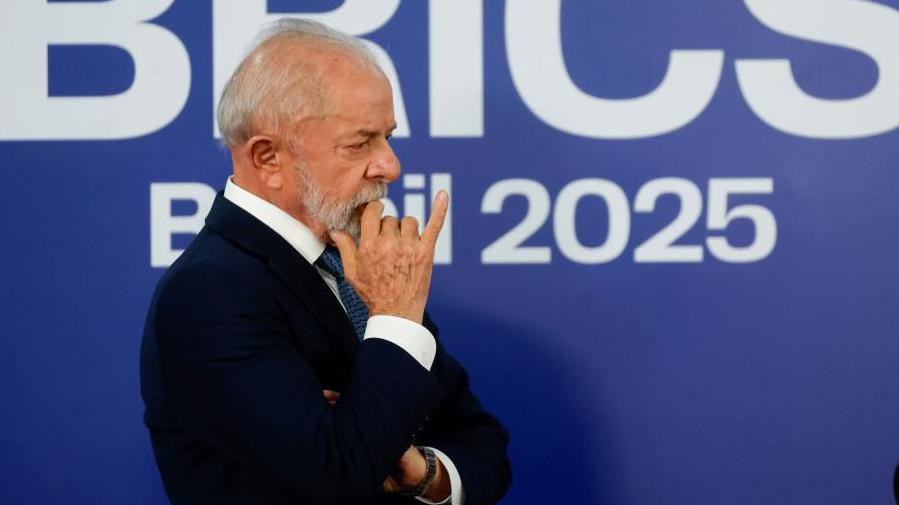
In an action highlighting ongoing strains in international trade connections, Brazil has declared its plan to implement matching tariffs following recent threats by former US President Donald Trump to establish a substantial 50% duty on some Brazilian products. This declaration represents the newest event in a sequence of economic strategies challenging the ties between two of the largest economies in the Western Hemisphere.
The controversy began when Trump, speaking at a campaign event, revived a long-standing grievance concerning what he describes as unfair trade practices by Brazil. In his remarks, Trump specifically referenced imbalances in trade and the need to protect American industries, suggesting that without corrective action, the US would move to impose a steep 50% tariff on selected Brazilian imports. While the threat is not yet an enacted policy, it sent immediate ripples through financial markets and prompted swift reaction from Brazilian officials.
In response, Brazil’s government stated that it would not hesitate to mirror any new tariffs introduced by the United States. This reciprocal approach is seen as a defensive measure aimed at maintaining the competitiveness of Brazilian exports while signaling that the country is prepared to stand its ground in the face of protectionist policies. Brazilian officials emphasized the importance of maintaining fair trade relations and warned that unilateral tariff hikes could damage both economies.
The potential for an escalating trade dispute has sparked concern among international economists, business leaders, and trade organizations. Both Brazil and the United States are significant players in the global economy, with substantial exports of agricultural products, manufactured goods, and natural resources. A tariff war between the two nations could disrupt supply chains, increase costs for consumers, and strain political relations that have fluctuated over the years.
The preparation of Brazil to impose retaliatory tariffs is part of a larger strategy to safeguard its major industries, such as agriculture, steel, and mining—areas that play a crucial role in the nation’s gross domestic product and job creation. Exports from Brazil, especially soybeans, beef, and iron ore, are very susceptible to shifts in trade regulations, and any rise in expenses might lessen their competitive edge in international markets.
Moreover, Brazilian officials pointed out that any unilateral decision by the United States to impose higher tariffs would violate existing international trade agreements and principles upheld by the World Trade Organization (WTO). Brazil has signaled that, in addition to reciprocal tariffs, it would consider seeking resolution through diplomatic channels and, if necessary, formal complaints within the WTO framework.
The history of trade relations between Brazil and the United States has seen both cooperation and friction. While the two countries have maintained strong commercial ties over decades, disputes over subsidies, market access, and import restrictions have occasionally led to legal challenges and policy disagreements. In past instances, such as disagreements over cotton subsidies and ethanol tariffs, both countries have resorted to formal WTO proceedings to resolve their differences.
The present scenario seems to be driven partly by the widespread global trend towards protectionism, which has been a significant feature of economic strategies in several countries during the last ten years. The emergence of nationalist trade strategies, alongside the persisting economic uncertainty after the COVID-19 crisis and geopolitical tensions, has resulted in heightened examination of international trade deals. Within this framework, Trump’s warning embodies an ongoing attraction to economic nationalism, a key element in his political discourse.
For Brazil, the prospect of higher US tariffs presents both economic and political challenges. The United States is one of Brazil’s largest trading partners, and any disruption to this relationship could have far-reaching consequences for Brazilian businesses and workers. Exporters in agriculture and manufacturing, in particular, could face declining sales and increased competition from countries not subject to the same tariffs.
Brazilian business leaders have voiced concern over the escalating rhetoric. Several industry associations have called for dialogue and cooperation rather than confrontation, stressing the importance of stable and predictable trade conditions for economic growth. They argue that retaliatory measures, while sometimes necessary, carry the risk of sparking a cycle of escalation that could ultimately harm businesses and consumers on both sides.
The Brazilian government, however, appears determined to take a firm stance. Officials have highlighted the country’s commitment to defending its economic interests and ensuring that its industries are not unfairly disadvantaged. At the same time, Brazil has expressed its willingness to engage in constructive dialogue with US counterparts to explore solutions that would avoid the need for punitive measures.
In practical terms, the application of tariffs from each side is likely to influence a variety of products. Among the primary imports for the United States from Brazil are steel, aluminum, coffee, beef, and agricultural goods. Meanwhile, Brazil receives American exports such as machinery, electronics, chemicals, and other high-value items. As a result, mutual tariffs could affect a broad range of industries, possibly resulting in increased prices and limited market access for companies in both nations.
The potential economic effects of this conflict extend beyond the direct trade connection. Brazil’s wider involvement in international supply networks might be hindered if protective measures become a standard. Likewise, the United States could encounter difficulties in obtaining affordable raw materials and agricultural products from Brazil, especially in areas where American manufacturing is limited or comes at a higher cost.
The global community has observed the scenario as well, with trade specialists cautioning about the potential for widespread consequences. In a time when worldwide economic stability is delicate, any major trade dispute between leading economies could have a wide impact, affecting commodity prices, currency steadiness, and investor trust. Multilateral bodies like the WTO and the International Monetary Fund have in the past advised against one-sided trade actions, emphasizing the importance of collaborative strategies for resolving disagreements.
It’s important to examine the political dynamics underlying these events. As elections draw near in both nations, economic strategies and nationalist language are expected to significantly influence public discussions. In the United States, trade policy has historically been a divisive topic, with discussions on tariffs, outsourcing, and the safeguarding of local employment affecting voter decisions. In Brazil, economic expansion, inflation, and international affairs are also significant subjects that might impact political results.
For everyday consumers, the stakes of such trade disputes are not abstract. Tariffs can lead to higher prices on a range of goods, from food and household products to automobiles and construction materials. Companies that rely on international supply chains may face increased costs, potentially passing these expenses on to consumers or scaling back operations. In the long run, persistent trade barriers can undermine economic efficiency and growth, hurting both producers and consumers.
Some analysts have suggested that, rather than pursuing tit-for-tat tariffs, the two countries could benefit from renewed trade negotiations aimed at addressing specific concerns while strengthening economic ties. By focusing on areas of mutual interest—such as technology exchange, infrastructure development, and environmental sustainability—Brazil and the United States could potentially chart a more collaborative path forward.
For now, however, the uncertainty remains. The Brazilian government’s commitment to imposing reciprocal tariffs if the US moves forward with its proposed 50% levy demonstrates a clear intention to defend national interests. At the same time, the desire for open communication and peaceful resolution suggests that there may still be room for diplomacy.
As businesses, workers, and consumers await further developments, the unfolding situation serves as a reminder of the delicate balance that underpins international trade. Economic decisions made on the political stage have real-world consequences, influencing jobs, prices, and international relationships. In the case of Brazil and the United States, the choices made in the coming months will shape not only their bilateral trade but also the broader landscape of global commerce.
In conclusion, the recent exchange of threats over tariffs between Brazil and the United States underscores the complex intersection of politics, economics, and international relations. While both nations have valid concerns about protecting their domestic industries, the path forward will require careful navigation to avoid escalating tensions that could harm both economies. The global community will be watching closely to see whether cooperation or confrontation defines the next chapter in this evolving story.



.jpg "Key compliance requirements for maintaining a Panama offshore company")